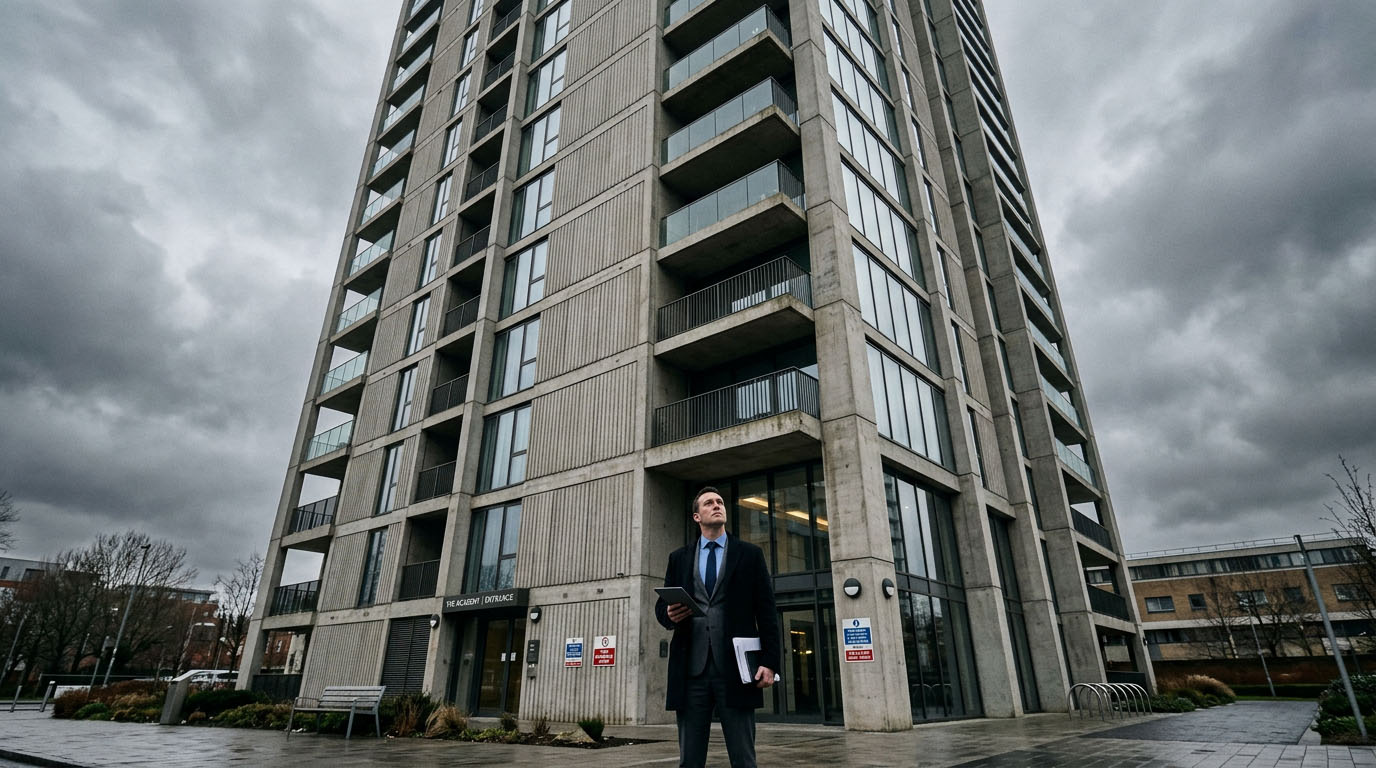
The Building Safety Act 2022 introduced the most significant change to the regulatory framework for residential buildings in a generation. For those responsible for higher-risk buildings (HRBs), the obligations that have come into force since 2023 represent a fundamental shift — from a compliance model based on periodic inspections to one of continuous, evidenced, and accountable building safety management. This guide sets out the key requirements and what responsible persons and accountable persons need to be doing to remain compliant in 2026.
What Qualifies as a Higher-Risk Building?
Under the Building Safety Act, a higher-risk building during occupation is defined as a building in England that is at least 18 metres or seven storeys in height and contains at least two residential units. This definition captures purpose-built blocks of flats, residential towers, and mixed-use buildings with a significant residential component above the threshold height.
It is worth noting that the threshold applies to the building's height, not its number of units. A relatively modest block of 20 flats that reaches 18 metres in height is fully within scope. Conversely, a sprawling low-rise development with hundreds of units and no single block reaching 18 metres is not.
The Duty Holder Framework
The BSA introduces a structured duty holder framework for HRBs in occupation. The key roles are:
- Accountable Person (AP): the legal or natural person who holds a legal estate in possession of a common part of the building, or who is obliged to repair a relevant part. In most cases this is the freeholder or head leaseholder. The AP holds the primary obligation under the Act and is personally accountable for compliance.
- Principal Accountable Person (PAP): where there are multiple APs — for example, where different parts of a mixed-use building are held by different entities — the PAP is the one whose interest includes the structure and exterior. They coordinate the safety case and resident engagement.
- Building Safety Manager (BSM): an optional but strongly encouraged appointment. The BSM manages the day-to-day building safety obligations on behalf of the AP, maintains records, and interfaces with residents and the Building Safety Regulator.
The Building Safety Case
Every occupied HRB must have a Building Safety Case — a structured body of evidence demonstrating that the building's fire and structural safety risks are being managed to a level as low as reasonably practicable. The Safety Case Report, submitted to the Building Safety Regulator, is a summary of this evidence base rather than the totality of it.
The Safety Case is not a one-time exercise. It must be reviewed and updated following any significant change to the building — structural works, refurbishment, changes in occupancy, or a fire or structural safety incident. The BSR may request access to the underlying evidence at any time, and APs who cannot produce a current, credible Safety Case risk enforcement action including the issue of a compliance notice.
"The Building Safety Case is the spine of HRB compliance. Everything else — the golden thread, resident engagement, change management — connects to and depends upon it."
The Golden Thread of Information
The golden thread concept requires that accurate and up-to-date information about the building is created, maintained, and passed on throughout the building's life. For existing HRBs in occupation, this means establishing a comprehensive record of the building's as-built condition, the fire and structural safety measures in place, and any changes made over time.
In practice, many existing HRBs lack adequate records. Original construction drawings may be incomplete or missing; historic refurbishments may not have been documented; maintenance records may be fragmented across multiple managing agents. Establishing the golden thread for an existing building often requires a significant programme of survey work and document recovery before an adequate record can be maintained going forward.
Registration and the BSR
All occupied HRBs in England were required to be registered with the Building Safety Regulator by April 2024. Buildings that were not registered by the deadline are in breach of the Act, and APs who have not registered should seek advice urgently. The BSR has been contacting known unregistered buildings and, in the most serious cases, has issued compliance notices.
Registration is not a passive obligation. The registered information must be kept current, and APs are required to notify the BSR of certain events — including the appointment or change of a BSM, certain types of work to the building, and any incident that affects building safety.
Residents' Engagement
One of the most distinctive features of the BSA regime is its focus on residents as active participants in building safety. APs must establish a Residents' Engagement Strategy — a documented approach to how they will provide information to residents, receive feedback, and involve residents in decisions that affect building safety.
Residents have the right to request information about the building's safety, to raise building safety concerns, and to bring those concerns to the BSR if they are not satisfactorily addressed. APs who fail to engage with residents in good faith will find that the regulator takes an increasingly dim view of this approach as the regime matures.